

Tides of Blood
By Dylan Larson,
winning submission
for Tell Me a Story -
a community‑sourced collaboration
that turns writing into dance.
Photo Credit: Bill Cameron
When Jan was seven years old she played flag football with the other boys as part of the school district’s sports league, decidedly too young and fragile yet for the as seen on TV football that would arrive in puberty. Too small for bruises, concussions, and real adult emotions. They wobbled around the field, finding their footing in a disorganized mass of bodies eager to catch a ball and prove themselves.
They grabbed at flying colors, strapped, loosely velcroed around the waistband. Flying colors trailing boys running hard, kicking up dirt.
Still, the boys found ways to be rough. You do at that age, find ways to bend violence and power. Jan was one of the weakest and easiest to target of the boys. She had a seemingly innate sincerity that the other boys, already trained in the methods of aloof masculinity, found noticeable and easy to pick at. Her peers would take fouls for a chance to push, pile on, and knock the air out of lungs. She often felt included more as a punching bag. On the outskirts but still a part.
She quietly found ways to adapt, to prove herself. She did what many other young boys did and started using her fists as tools of power. Urgent care and ER visits only when things got real bad, finger bones all at weird angles. Knocked out teeth and the dentist was too expensive. Eyes bruised but mostly bright with fright, coursing full of adrenaline and scratching up the hillside for meaning. Fighting kids at school, at home, some who deserved it and others who did not, all with football in between. Just making her body feel real in a way that actually separated her from her mind. Her body was real and it was powerful. Just watching it move like being a controller or watching a movie.
Growing her hair out and buzzing it, rinse and repeat. Torn between good and strong, right and powerful. Two poles which in embracing one denied the other. Cut out half of herself. Dressing in all black all the time like a funeral attendee for her own wake and anyone who crossed her path.
Her mom only came to one of her games ever, during the disaster year when she had come out. “Come out” in big quotation marks. Her mom finding evidence on her phone, her teenage phone full of timid, frightened internet searches. Trying to find answers to questions about bodies, hormones, statistics. Shouting match ensued, no space for reason, just room filled wall to wall with heat and confusion.
After that reveal her mom showed up to her next game, some mediocre near empty stands scrimmage that added up to nothing, sitting up in the bleachers, watching.
She burned with shame on the field. Her mom was the only one who knew that Jan was a girl. No, not even that–that Jan wanted to be a girl. There Jan was, trying to pretend at being something else. Her mom’s eyes on her. Big helmet, cage around the face. Not hiding her features but trapping her in them. Wide shoulders accentuated by pads now made for heavy hits. Big strong arms, leg muscles stretching like wires from 1940s room sized computers. Distinctly masculine. Needing to change her body, but wanting to do it quietly. Not knowing any other options. She didn’t tell any of her friends, certainly no one at school or on the team. Would she even be able to still play? Would she want to? Relegated to some third category.
The rough sweat stained flesh, pads, and polyester hitting at high speeds on the high school’s sprinkler wet grass, unglamorous white lines marked east of the parking lot. She played badly that game. Got knocked into, knocked down. Maybe her loss would make a point to her mother. To all the unknowing onlookers. Laying in the tickling grass, face up. No stars in the suburbs. Weakness on display like a pendant or an I.D. card to join the club of womanhood. These thoughts only burned her with deeper shame, and neither her nor her mother brought up the matter of her gender again.
Older now, her rage had quieted into something softer but just as alive. It didn’t jump out of her pores like it used to. It sat like a steel ball beneath her diaphragm. She cradled it in her belly; not burning hot with leaping flames but cool, smooth, frictionless. It sat heavy. And so she held it. She felt it grow warm at times. She savored those moments like campfire heat.
Jan sat on the ground, on the sidelines of some collegiate practice game she was only half playing in. Helmet off, sweat trickling down past her ears. It was fall semester and the air was only just starting to cool. She sniffed and wiped her nose. She watched her teammates. In high school she believed that football was all about brute force, but these players moved with precision. Feet turning at a moment’s notice, bodies on a swivel to dodge that unstoppable force, reaching up to grab that ball. Fingers outstretched in a practiced pattern, the firm grip when it lands solidly between them, closing on instinct. The grass was moist from morning’s thawing frost.
She rolled that rage around and sat quietly. Watching them play, she felt every emotion she’d ever felt. Multilayered shame; shame at what she was, shame at her inability to embrace it, shame at how she let it control her. Anger at her impossible choice between one mode of survival and another. To give up what she loved and needed for some version of herself she didn’t know even existed. Could she go for that leap of faith, believe that things would balance out? The field’s lights were on, high up on poles and fanned wide. They glared in her eyes and she glared back. It was exposing. Shadows so strong behind her they looked burned into the grass. She tried not to cry. She breathed deeply and closed her eyes.
The steel ball sat in her belly. It was hers to control and no one else's.
She swallowed her shame, her fear, her anger and wrath. It all met the steel ball, waiting for it, and polished it over once more. She was in control. She could hear the blood rushing in her head like the sound of the ocean. Big waves rushing up and out. The tide slapping the current. Understanding deep down that she was not the collection of blood and other matter that made her, she was the wave.
When she saw herself in her mind’s eye, she saw herself as I child, a long piece of fabric flying behind her. Playing flag football, covered in grass stains, panting young shallow breaths. Deep sips of water and do it again next week. But she wasn’t a child anymore. The waves crashed in her head.
About Threads Dance Project & Tell Me a Story
Founded in 2011, The Karen L. Charles Threads Dance Project (Threads) examines, exposes, and celebrates the threads that connect us. At the heart of that mission is a belief that dance is one of the most direct ways to communicate truth, no matter how difficult or mundane.
For 15 years, Artistic Director and choreographer Karen L. Charles has brought that belief to life, telling stories through movement that explore our shared humanity, social justice, connection, and community.
Tell Me A Story expands that tradition by inviting the community into the storytelling and creative process.
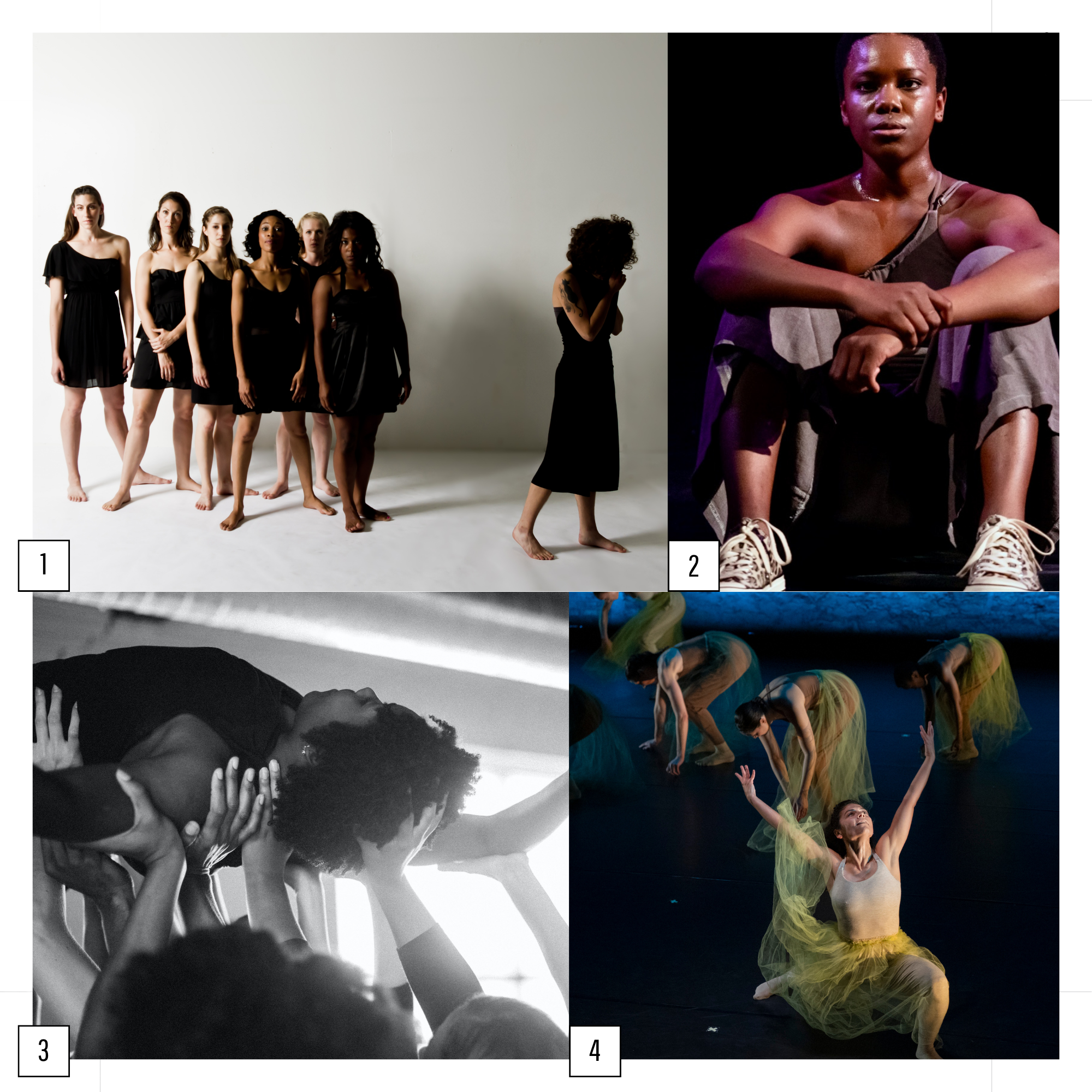
The initiative began with four photographs of Threads dancers and an invitation: choose an image and write the story it inspires. The submissions revealed how a single image can spark vastly different ideas, emotions, and narratives.
From those submissions, stories by Dylan Larson and Klaus Solko were selected to inspire new dances created by Karen and the Threads dancers. The authors joined Karen in the studio, attended rehearsal, and participated in a community Coffee Break, giving audiences a glimpse into the transformation of words into movement.

Threads honors 15 years of engaging audiences through our work that shares human justice stories - narratives highlighting the universal dignity of humanity, striving to increase access to power and further progress towards a more just and equitable society through Tell Me a Story.


This activity is made possible by the voters of Minnesota through a grant from the Minnesota State Arts Board, thanks to a legislative appropriation from the arts and cultural heritage fund.

This activity is made possible by the Bridge Fund for Dance program through the City of Minneapolis Arts & Cultural Affairs Department.

